

2026
Delta farmers test new automatic polypipe puncher
Mississippi State University engineers build a tool that automatically punches precise holes in irrigation polypipe, potentially reducing water waste.

Raney Rapp, Senior Staff Writer, Farm Press
 Originally published by Farm Press. Raney Rapp, Senior Staff Writer. .
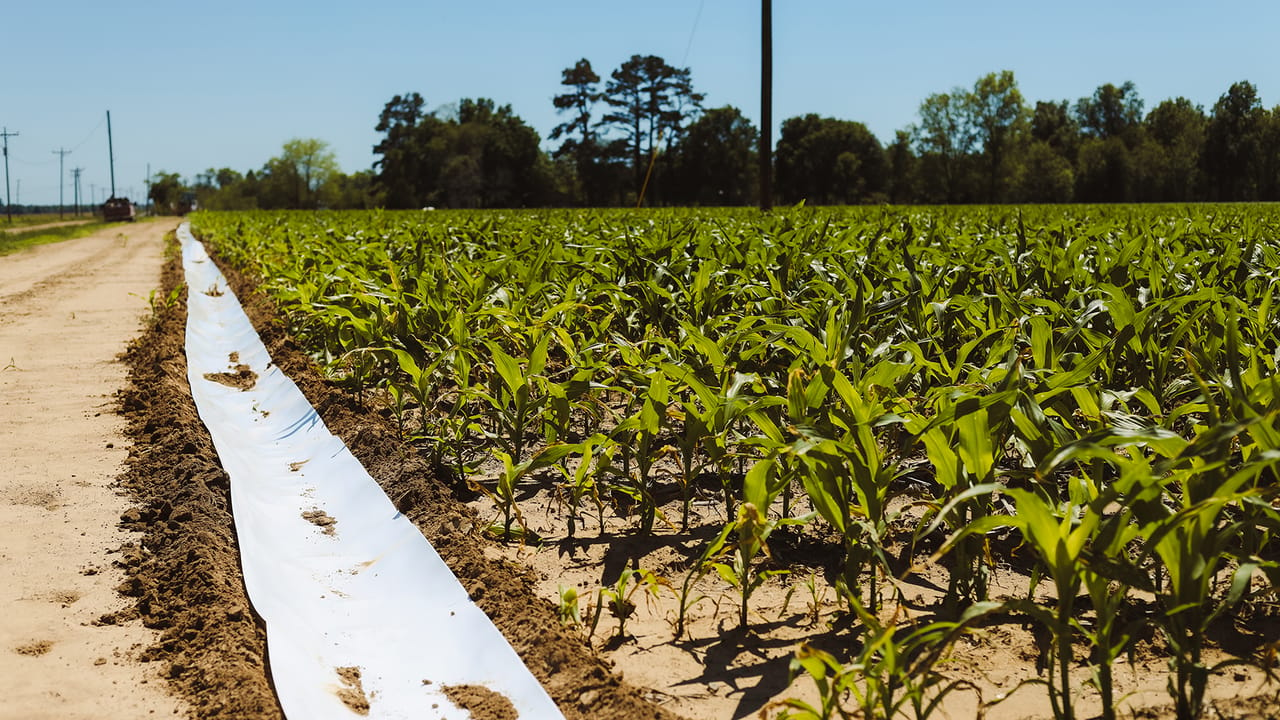
Gleaming growing-season rows of bright-white polypipe are as iconic to Delta farming as the turnrows themselves. Spotting these beacons of agricultural productivity across the landscape reminds farmers their wealth lies with the region’s greatest resource: water.
The Mississippi River Alluvial Aquifer is the main source of irrigation water across the Delta region, covering agricultural land along the Mississippi River, as well as the Lower Mississippi River Basin, Arkansas Delta and the Missouri Bootheel.
While the aquifer remains a healthy, vital contributor to Midsouth agriculture, there are pockets along its broad coverage area where long-term use is beginning to show depletion.
“That starts an emphasis on different irrigation practices, whether implementing new technology on farm or finding different ways to use less water,” said Drew Gholson, irrigation specialist at Mississippi State University. “There’s been a concerted effort to look at new ways we can be more conservative in our irrigation strategies.”
Mississippi farmers lead the nation in some of the most innovative water optimizing technology, such as soil moisture sensors, which 30% of farmers use to make their irrigation decisions compared to the national average of 13%.
Revolutionized water use
2Desired Results (IFR)Over the last 10 years, computerized hole selection has also revolutionized Delta water usage. With the ability to save up to 20% on irrigation efficiency, computerized hole selection makes a big difference for the more than 80% of Mississippi farmers using furrow irrigation.
Computerized hole selection analyzes field data and pump parameters to prescribe the ideal size and ratio of holes along an irrigation pipe to ensure the field is evenly and effectively watered without waste.
However, it’s punching the holes that creates problems. Once the pump is turned on, farmers must race against the clock to punch holes in the polypipe at just the right pressure. 3ContradictionIf the pipe is too full, the pressure will release too quickly as more punches are made. If they wait too long, the pipe will rupture from too much pressure, and the punches won’t be the correct size.
“There’s a lot of precision we can add with polypipe, but we’re measuring with a protractor and cutting with a chainsaw,” Gholson said. “We know exactly what the best size is to be efficient uniformly in all of our crops, but then we’re whacking away at it.”
Drew Gholson
Automatic hole puncher could be answer
Gholson, precision ag specialist Wes Lowe and their MSU colleagues envisioned a straightforward solution for improving holepunching accuracy: 4Solution Concepta tool that would automate the punching process, just as hole size and spacing had already been automated. Turning that idea into a working tool, however, proved far from simple.
“We went through a whole series of understanding the material and how it acts. Is it the material and the way that it behaves the same at the end of the season as it was at the beginning of the season?” Gholson asked. “So we tested all of those things to make sure that we truly understood the media we were working with.”
5RequirementsFormulating a tool that could unspool polypipe in the field, follow a formulated punch plan and efficiently punch the right size hole was a big ask — especially because the holes needed to be punched without the traditional addition of water pressure.
6Serendipitous SolutionIn the end, a late-night epiphany solved the problem.
“I can’t turn my brain off when we’re working on a problem like this, so one night around 3 a.m., I just realized what we needed to do,” Gholson said.
7Potential Solution“The next day, I walked into the shop and tested a leather punch tool that we had, and it cut through the material perfectly.”
Drew Gholson
Finding a sharp, precise type of punch was important for the project, which relied on rolling the polypipe over the punch tool on the folded side of the plastic to create a single, smooth hole as the unroller moved the plastic down the field edge.
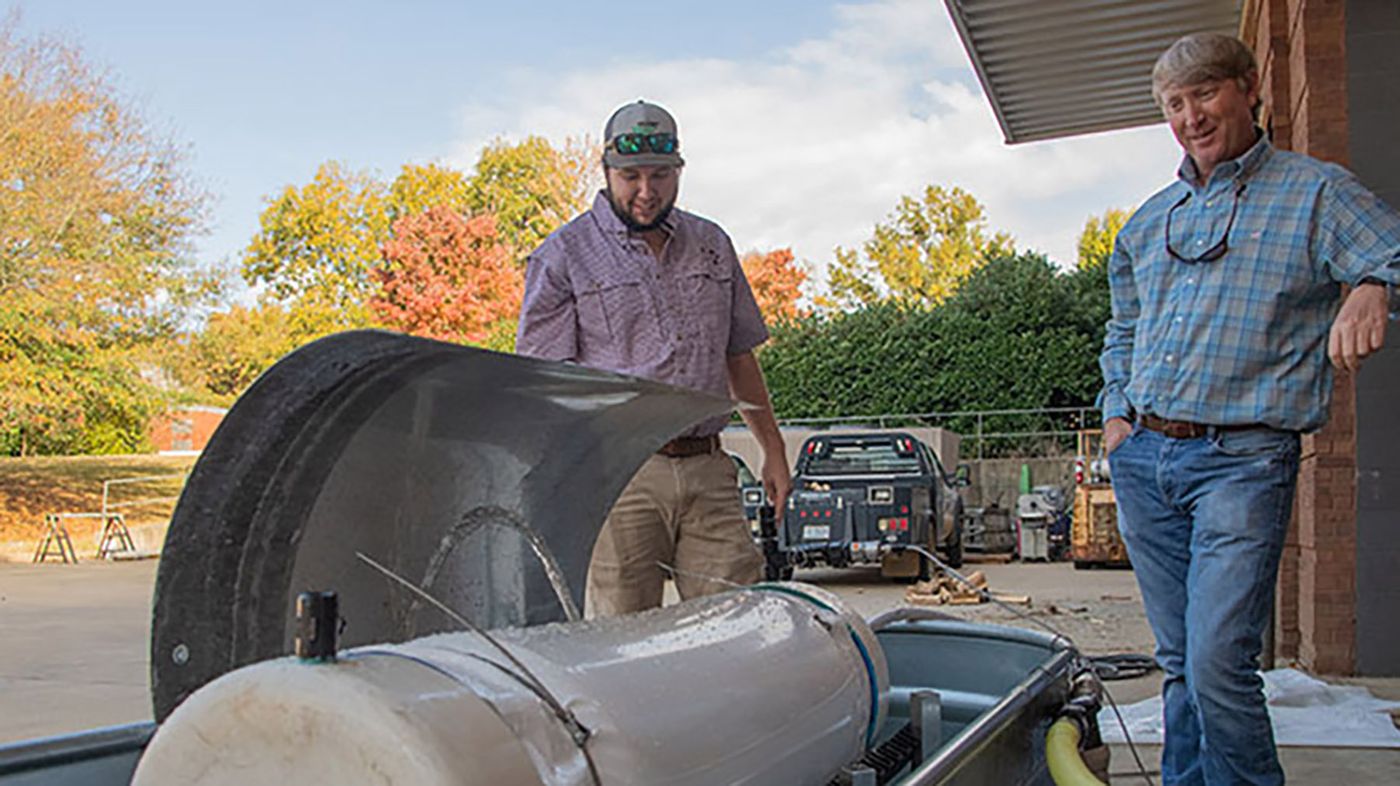
8PrototypeOnce a super-sharp punch was identified, the researchers turned the project over to engineers in the shop to create a patent-pending tool that could roll out and punch prescribed holes in polypipe automatically.
Now that the tool has been built and tested in-house with great success, researchers said it’s time to send it out for in-season evaluation.
9Live Testing“We’re going to do on-farm, in-field evaluation comparing the automatic holes, versus hand-punch holes, because we think it’s going to be more accurate, but we want to see consistent proof,” Gholson said.
If the tool holds up to the rigors on fieldwork, it could limit water usage, as well as farmer labor, across the Delta.
“Into the spring, we’re going to be putting this implement in farmer’s hands and letting them try out so we can have that feedback back for it,” Lowe said. “It’s been in the shop for majority of the time. Now, let’s get it out and let’s see if we can break it.”
Wes Lowe